Less Weakness.

More Strength.

Not a real person. AI-generated image.

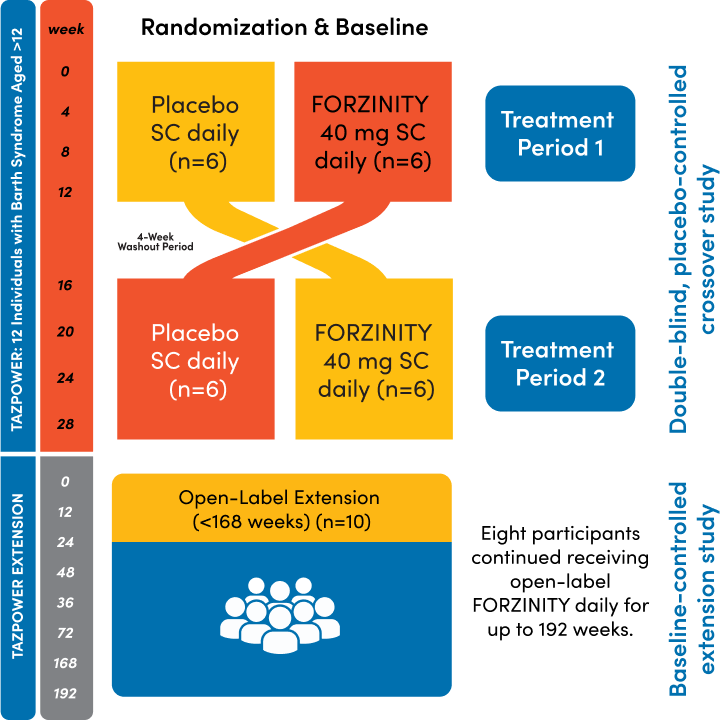
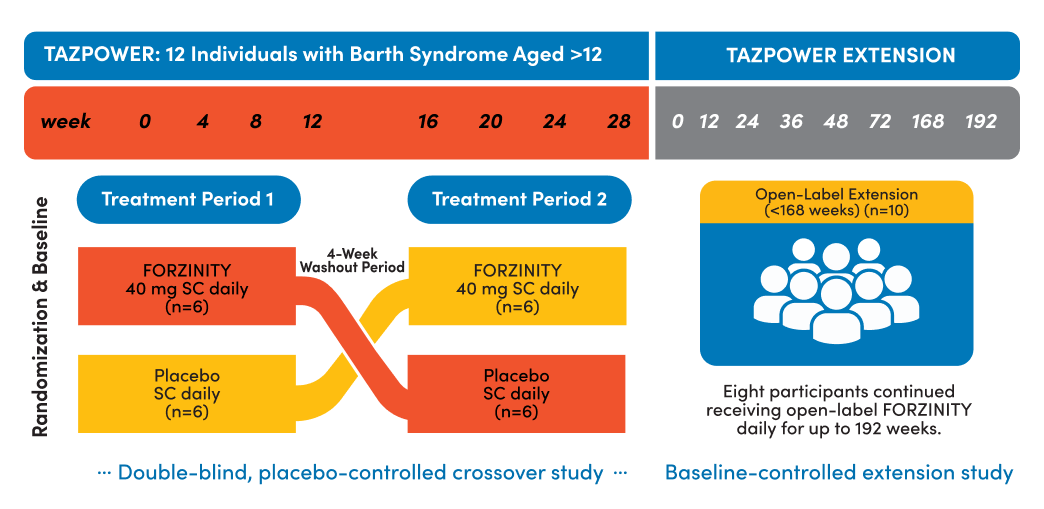
FORZINITY safety and efficacy were studied in the long-term TAZPOWER trial1

The TAZPOWER trial consisted of 2 phases

  • 1

    A 28-week randomized, double-blind, placebo-controlled, crossover study assessing short-term efficacy and safety

  • 2

    A long-term, open-label, single-arm extension study lasting 36-168 weeks assessing durability and continued functional gains

The TAZPOWER patient population was reflective of the real world2

  • Mean age: 19.5 years old

  • Mean height: 5 ft 6 in

  • Mean weight: 50.8 kg (112 lbs)

  • BMI: 17.6 kg/m2

FORZINITY received accelerated approval on the basis of an increase in a lower extremity functional assessment as seen in knee extensor muscle strength.1

In the TAZPOWER extension,
increases in knee extensor muscle strength were observed.1

At 168 weeks, patients had significant and lasting improvements of
over 50% in knee muscle strength1

Median change in knee extensor strength1

Descriptive statistics; all descriptive statistics use the muscle strength measurement obtained immediately prior to the first dose of study medication at the beginning of Period 1 of the randomized controlled trial as baseline.

The FORZINITY indication was approved under accelerated approval based on an improvement in knee extensor muscle strength, an intermediate clinical endpoint. Continued approval for this indication may be contingent upon verification and description of clinical benefit in a confirmatory trial(s).


FORZINITY helped patients with Barth syndrome get stronger and stay stronger with continued treatment.1

FORZINITY has a manageable safety profile1

The most common side effects with FORZINITY were injection site reactions, which were generally mild to moderate.1,3

Most Common Adverse Events1

(Periods 1 and 2)

FORZINITY

Placebo

N=12
n (%)

N=12
n (%)

Any local administration reaction

12 (100)

8 (67)

Injection site erythema

12 (100)

3 (25)

Injection site induration

8 (67)

2 (17)

Injection site pruritus

8 (67)

2 (17)

Injection site pain

9 (75)

5 (42)

Injection site bruising

3 (25)

0

Injection site urticaria

3 (25)

0

Injection site hemorrhage

0

1 (8)

Learn about FORZINITY dosing and administration

Dosing

INDICATION AND IMPORTANT SAFETY INFORMATION

IMPORTANT SAFETY INFORMATION
Contraindications

FORZINITY is contraindicated in patients with serious hypersensitivity to elamipretide or any of the excipients in FORZINITY.

Warnings and Precautions

Benzyl Alcohol Toxicity – Do Not Use in Neonates

Serious and fatal reactions (including metabolic acidosis progressing to neurotoxicity and gasping syndrome) have occurred in preterm and low-birth-weight neonates receiving benzyl alcohol (BA)-containing drugs.

FORZINITY contains 20 mg BA/mL and is not approved for use in neonates or for IV administration.

Hypersensitivity

Reported reactions include rash, papular lesions, eczema/dermatitis, cough, and serious allergic reactions requiring emergency medical intervention.

Reactions may occur minutes to months after starting treatment. Monitor patients for signs and symptoms during treatment.

Discontinue FORZINITY permanently if a serious hypersensitivity reaction occurs.

Adverse Reactions

Adverse reactions occurring more commonly with FORZINITY than with placebo included injection site reactions such as injection site erythema, pain, induration, pruritus, bruising, and urticaria.

Eosinophilia

Modest elevations in eosinophil counts (peak ~90 days) occurred but were not associated with clinical symptoms.

To report SUSPECTED ADVERSE REACTIONS, contact FDA at 1-800-FDA-1088 or www.fda.gov/medwatch.
Please see Full Prescribing Information for FORZINITY.
INDICATION

FORZINITY is a mitochondrial cardiolipin binder indicated to improve muscle strength in adult and pediatric patients with Barth syndrome weighing at least 30 kg.

This indication is approved under accelerated approval based on an improvement in knee extensor muscle strength, an intermediate clinical endpoint. Continued approval for this indication may be contingent upon verification and description of clinical benefit in a confirmatory trial(s).

 

IMPORTANT SAFETY INFORMATION
Contraindications

FORZINITY is contraindicated in patients with serious hypersensitivity to elamipretide or any of the excipients in FORZINITY.

Warnings and Precautions

Benzyl Alcohol Toxicity – Do Not Use in Neonates

Serious and fatal reactions (including metabolic acidosis progressing to neurotoxicity and gasping syndrome) have occurred in preterm and low-birth-weight neonates receiving benzyl alcohol (BA)-containing drugs.

FORZINITY contains 20 mg BA/mL and is not approved for use in neonates or for IV administration.

Hypersensitivity

Reported reactions include rash, papular lesions, eczema/dermatitis, cough, and serious allergic reactions requiring emergency medical intervention.

Reactions may occur minutes to months after starting treatment. Monitor patients for signs and symptoms during treatment.

Discontinue FORZINITY permanently if a serious hypersensitivity reaction occurs.

Adverse Reactions

Adverse reactions occurring more commonly with FORZINITY than with placebo included injection site reactions such as injection site erythema, pain, induration, pruritus, bruising, and urticaria.

Eosinophilia

Modest elevations in eosinophil counts (peak ~90 days) occurred but were not associated with clinical symptoms.

To report SUSPECTED ADVERSE REACTIONS, contact FDA at 1-800-FDA-1088 or www.fda.gov/medwatch.
Please see Full Prescribing Information for FORZINITY.
INDICATION

FORZINITY is a mitochondrial cardiolipin binder indicated to improve muscle strength in adult and pediatric patients with Barth syndrome weighing at least 30 kg.

This indication is approved under accelerated approval based on an improvement in knee extensor muscle strength, an intermediate clinical endpoint. Continued approval for this indication may be contingent upon verification and description of clinical benefit in a confirmatory trial(s).
 

References:
1. Forzinity Full Prescribing Information. Needham, MA. Stealth BioTherapeutics, Inc.; 9/2025.
2. Thompson WR, Hornby B, Manuel R, et al. A phase 2/3 randomized clinical trial followed by an open-label extension to evaluate the effectiveness of elamipretide in Barth syndrome, a genetic disorder of mitochondrial cardiolipin metabolism. Genet Med. 2021;23(3):471-478. doi:10.1038/s41436-020-01006-8
3. Thompson WR, Manuel R, Abbruscato A, et al. Long-term efficacy and safety of elamipretide in patients with Barth syndrome: 168-week open-label extension results of TAZPOWER. Genet Med. 2024;26(7):101138. doi: 10.1016/j.gim.2024.101138